Showing posts with label lola djangi chécain. Show all posts

March 22, 2012

Limelight

Please don't think that the stream has dried up. I have been very busy digitising more cassettes and records. Given the small amount of time I have this has kept me from sharing more musical wonders with you in the last fortnight.

In this post I would like to revisit the music of one of my favourite orchestras: Franco's O.K. Jazz. And in particular I would like to share more examples of the musical talent of Lola Djangi a.k.a. Chécain (see this post, and many others).

In my earlier posts I wrote about his role as a vocal "deuxième". This usually means the lower of the voices in a song. In this position out of the limelight Chécain's voice can at times - by those unfortunate beings who are less acquainted with the work of the O.K. Jazz - be mistaken for the voice of another vocalist. I can particularly understand his voice being confused with Franco's. Those who have heard his interpretation of "Mario", after Franco's death, will have to agree that - apart from the power which came from Franco's assertive personality - it was the closest anyone has come to Franco's original in sound and timbre.

But luckily Chécain has found another way to 'make his mark'. In the majority of his songs he manages to insert some kind of spoken comment. In the first of these six songs I am sharing with you in this post. "Ta Noel", he can be heard after 33 seconds, - exactly the same moment as his intervention on the B-side "Bana bakufelaka ngai tina nini?".

Both these songs, sung by Youlou Mabiala and Chécain, were composed by sax player Isaac Musekiwa, not one of the regulars when it came to contributing compositions. One would perhaps expect a good dose of sax, but in fact the horns don't show up till after 1'52 and - although present - don't outshine Franco's guitar. On the B-side we even have to wait for just more than two minutes to get any sax....

According to the label of this single on the African label, but originally released on Franco's Epanza Makita, the single was produced in 1970. Although dating in this period is a tricky business I think this must be correct, given that Chécain's "Emilie Na Gabon" and Youlou's "Likweyi" (both on Sonodisc CD 36520) were released as Epanza Makita 100 and 101. Of the singles released on the Epanza Makita label relatively many remain undigitised. And the singles of this period that háve been digitised have sometimes been sadly mistreated.

African 90.464 [Epanza Makita 114]


The second single was released on Decca's Congo sublabel. The B-side of the single is the same as the B-side of the first single. The A-side was originally released as Epanza Makita 111, with "Nabanza tele" on the flipside (according to Ewens). This song, "Nganda Benda Bika", was composed by Michel Boyibanda, who is also one of the three singers. The others are, yes you guessed right, Youlou and Chécain.

In this song Chécain is perhaps a bit harder to discover. He is certainly not responsible for the spoken incursion after 52 seconds. To be honest I don't really know who is talking there. Any ideas?

The quality - 'vinylwise' - of this single is disappointing, as is the case with most of the singles I have heard of this label. I am not sure if this is a problem of aging or one of intention on the part of Decca.
Musically this is also not one of the hottest songs in the extensive catalogue of the O.K. Jazz....

Decca Congo CD.191 [Epanza Makita 111/114]


In case you are wondering: the A-side of the next release on the Epanza Makita label, Epanza Makita 112 was "Bolingo Marie-Angele", composed by (who else?) Chécain, and digitally released on Sonodisc CD 36514. This is a track very much in the vein of "Ta Noel"/"Bana bakufelaka ngai tina nini?", - with Chécain's trademark comment at almost exactly the same point in the song.

Our friend again features in the next single, released originally as Epanza Makita 113, but here in the Decca Congo version. On both sides he is backing Michel Boyibanda, and this appears to give him almost an equal spot in the vocal balance. Particularly in these two songs the resemblance to Franco is noticeable.

Listening to the opening of "Simon Temoin Ya Libala" (I suppose this means "Simon witness at the wedding") one wonders what Chécain contribution was in this composition by drummer/conga player Jean-Félix Pouéla a.k.a. Du Pool (who I think I mentioned earlier*), as the bride appears to be his dearest Emilie ("Emilie mon amour"). The same Emilie as the one in Gabon (see above)? Chécain certainly has composed songs about his own experiences.

In both songs he is a bit late with his chat. He doesn't show up until after 0'50. I must add that someone else takes over after him (after 0'56) in "Simon Temoin Ya Libala".

I like these two songs, despite the poor record quality. Although they don't radiate brilliance on the level of Franco's Great Hits, they are good enough for a modest spot in the limelight.

Decca Congo CD.192 [Epanza Makita 113]

All three singles can also be found, bundled together, here.

* and who I as I recently noted also played on that classic Papa Noel album "Bon Samaritain", with that glorious voice of Carlyto.

May 22, 2011

Franco at Ngoma

You may remember my earlier posting of two of the volumes of the Sonafric series (of three) "Les Grands Succes Zaïrois". In that post I mentioned that all of the tracks on those two albums appeared to have been released on the Ngoma label.
Furthermore I indicated that it looked to me like the two tracks by Franco et l'O.K. Jazz on Volume 3, "Beyos" and Franco's superb "Ngai Na Boya Na Boya Te", had been shortened.

A few weeks later I received a mail from Danish journalist and connaisseur Flemming Harrev. He wrote: "I can confirm that the two Sonodisc albums 'Les Plus Grands Succès Zaïrois' vol. 2 (SAF 50.043) and vol. 3 (SAF 50.044) were rereleases. They were originally released by Ngoma in France ca. 1969. The Ngoma albums were titled 'Toute l'Afrique Danse' vol. 5 (J 33 008) and vol. 6 (J 33 009) respectively. The track-titles and the sequencing is identical on both Sonodisc albums. In your comments on the Sonodisc albums you indicate the length of the tracks have been tampered with. I have a copy of Ngoma J 33 008 and have compared it to Sonodisc SAF 50.043 and can confirm that the length of all the tracks are identical. The back cover of my Ngoma album has b/w pictures of covers and track info on nine other Ngoma albums (inluding J 33 009 alias Sonodisc SAF 50.044)."

And there is more!
"When it comes to Sonodisc SAF 50.044 I can only make a comparison of the two tracks with Franco & OK Jazz (BEYOS / NGAÏ NA BOYA NA BOYATE) which I also have as an Ngoma single (J 1 056). When I checked the length of the tracks on the single against the length of the same tracks on the Sonodic album I came up with the following result: the Ngoma single tracks are 5.26 / 5:21 respectively, compared with the Sonodisc album tracks' 3:49 / 4:15. Voila!

I have copied the cover of the Ngoma single - attached. On the back-cover you will find the missing series number on your list of Ngoma original singles for Verckys & son ensemble (Okokoma Mokristo / Sasa Akeyi Congé): J 5 146. I also have two other Ngoma singles with OK Jazz: J 1 058 MARIE CECILE / MARIE ELENA and J 1 059 CONGO MIBALE / THOMAS which I could send if you are interested.

Returning to the Sonodisc albums 'Les Plus Grands Succès Zaïrois'. Vol. 1 (SAF 50.042) is identical to the Ngoma album with Dr. Nico and African Fiesta (J 33 007). Another Ngoma album with Dr. Nico (J 33 001) was rereleased as Sonodisc SAF 50.007, Ngoma J 33 002 with Rochereau was rereleased as Sonodic SAF 50.004, Ngoma J 33 003 with Dr. Nico was - as far as I can make it out - never rereleased (Alastair Johnson does not have it in his book either, so it must be very rare) , Ngoma J 33 004 - still in the 'Toute l'Afrique Danse' series - was with Don Diego et son orchestre (Cuban band-leader), Ngoma J 33 005 with Rochereau was rereleased as Sonodisc SAF 50.002, Ngoma J 33 006 with Dr. Nico was rereleased as Sonodisc SAF 50.003, Ngoma J 33 008 and J 33 009 became vol. 2 and 3 of 'Les Plus Grands Succès Zaïrois', Ngoma J 33 010 with Kosmos Alphonso et l'orchestre Les Esprits I have no further information on.

I have checked old issues of Bingo Magazine and found 3 more Ngoma albums in Gilles Sala's list from March 1971 (page 57): J 33 013, J 33 014 and J 33 015. Judging from the album titles alone the two first albums with Verckys would be identical to Sonodic SAF 50.008 and SAF 50.009. The third album (J 33 015) Kwamy à Paris 'Ma cousine Bernadette' I have no further information on. I miss copies of Bingo from 1969 and 1970 (have 1967-1968 + 1971-1991) so I have no idea of what might have been released on Ngoma J 33 011 and J 33 012.

In your comments on 'Les Plus Grands Succès Zaïrois' you also made a point of Cercul Jazz not being a band from Zaire but came from Congo-Brazzaville. Maybe the other two unknown bands, Kongo Vox and Congolia, also cane from Brazzaville. I have a another Ngoma single with Kongo Vox where the composer of the tracks is given as Dupool - alias Jean-Félix Pouela - whom I am to believe came from Brazzaville (according to the information I can find on the internet) and who should have had a short envolvement with OK Jazz. Does this ring a bell with you?
"

What a delight to receive such detailled information!

I must correct the point about Docteur Nico's Ngoma J 33003 not being in Alastair's book. It is, on page 40.

I am very curious about the Kwamy à Paris album (Ngoma J 33015). If anyone has it, please share it with us!

As to Dupool, Lutumba Simaro mentioned him in 1991 as a drummer originally from Brazzaville, where he played with Les Bantous.

It gets even better. Flemming not only sent the three singles he mentioned in his mail, but later even found a fourth one. And all four singles are in absolute top condition. And, as if to prove a point I made in an earlier post, none, - I repeat: none - of these tracks has made it on to CD.
Which, if you ask me, is a miracle......

Because not only is there an extended version of "Ngai Na Boya Na Boya Te", which not only means the sax solo is finished (it is faded out on the lp version), but also that Franco returns once more. This 'upgraded' version of one my (many) favourite O.K. Jazz songs would be enough for me.
But the other three singles also have some classic O.K. Jazz songs to offer.

"Michaël Bolingo" is one of these, with Vicky Longomba (again - as in "Beyos") delicately backed by Franco, and with Youlou joining Franco when Vicky does his solo bits. For some it may sound like more of the same, but me, I can't get enough of these songs.
The B-side "Mbanda Na Ngai" (not to be confused with the song of the same title by Kwamy on the Surboum label) again offers proof of composer Lola Chécain's great skills as a backing singer. Here he backs Youlou like a shadow, - but does add his signature after 48 seconds...

On Ngoma J 1058 "Marie Cécile" offers a mystery. Well, at least to me. For who is the singer next to Franco at the beginning of this song? Is it a cleverly disguised Michel Boyibanda? And who is the guy talking after 1'11? And what is the meaning of that comical interlude with the sums, after 4'10?

And talking about comical, is the B-side serious? I mean, it is an absolutely fantastic version of that Mexican evergreen "Maria Elena". But it is also very much too. The singing is relatively normal (and who is singing the lead? And is that Chécain backing? Or - also - Franco*?), but my pants dropped when the trumpet came in.
Wow!

I suspect "Congo Mibale" is one of Franco's song with a Message. The decisiveness of Franco's singing, the fact that he is trying to fit words into the rhythm, the naming of famous Congolese (Lumumba).... The passage between 1'48 and 2'55 suggests that the song is about the division of the two Congos. Franco names the languages the two countries have in common. It is clear that this was in issue in the second half of the 1960s (see also my earlier post about Orchestre Manta Lokoka).
As to the B-side, "Thomas" (again composed by Franco**), is it me, or is this song dominated by the bass player? For some reason it seems to provide a perfect build-up to Franco's solo, starting at 2'41.

I have mentioned it before, and these four singles offer more proof: there is still a great part of Franco's legacy that has never been released in digital form. So there is also no reason to stop looking, and to only reproduce (and sometimes even in distorted or incomplete form) what others have produced before.

Ngoma J 1056
Ngoma J 1057
Ngoma J 1058
Ngoma J 1059

Alternatively you can download all four singles in one file.

* I am almost sure the hums after 4'42 are Franco.
** In fact the only two songs on these four singles not composed by Franco are the song composed by Chécain and "Marie Elena".

December 20, 2010

Photos

Lola Djangi 'Chécain', 1974
You may remember my earlier post in which I described Lola Djangi 'Chécain' as a singer from the 'old' (1960s) O.K. Jazz style. In this post I would like to focus more closely on this singer, who sadly died in 1992.

For most listeners Chécain will not be the easiest singer to recognise. For one thing, he usually acted as backing vocalist. And, perhaps more importantly, his voice matched his personality: unobtrusive - bordering on unpretentious - with a tendency towards the melancholic. Amongst the 'heavyweights' of the Tout Puissant O.K. Jazz he was not one to elbow himself into the limelight.
On the lp "In Memoriam Grand Maître Franco Vol. 9" he sings on a remarkably high percentage of the tracks: four out of the seven tracks. And of these four, his contribution to the song "Bodutaka" (composed by Lutumba Simaro) can be described as 'typical'. The song is dominated by Sam Mangwana and Josky Kiambukuta, with a 'cameo appearance' by Michel Boyibanda, who is allowed to do the third solo part. Chécain can only be heard in the background, when the three other vocalists do their solos, and 'animating' when Franco sets off into the sebene.

Chécain with Sam Mangwana
Far less typical is the fact that of the four tracks no less than two were composed by Chécain. These are in my opinion two of the best songs he has made for the T.P. O.K. Jazz. For one thing both songs feature Chécain sings with or alongside Sam Mangwana. A combination of voices which drew Mangwana, coming from the African Jazz/Fiesta side of Congolese music, into the O.K. Jazz style. And then there is of course Franco.....

But let's start at the beginning. This ninth volume of the "In Memoriam" series, which was released by Polygram Kenya shortly after Franco's death at the end of 1989, starts of with a Part Two. I can only guess why Polygram decided to select "Assitou" again, after they had already included the full version (part 1 and part 2) in Volume 1*. Maybe they were compensating for the inclusion of only the first part on "Fifteen Years Ago Vol.4" (ASLP 1024) a year earlier?
I am not complaining, however, as there can not be enough releases of this superb example of Franco's "let's run down the Kilimandjaro" chauffage (after 3'15). "Terrible", indeed. I strongly advise you to also take note of the complex patterns of rhythm guitars and Mpudi Decca's passionate bass playing.

"Zando Ya Tipo Tipo" is not only an interesting song for its lyrics (see Aboubacar Siddikh's YouTube version), but also for the extraordinary combining of the voices of composer Michel Boyibanda and Josky Kiambukuta. Both have voices with a tendency towards a 'coppery' sound, but the effect is strenghtened because Boyibanda sings the (higher) lead part, - and Franco takes it to another level of 'copperyness' with the sharp sound of his guitar.

The third song, titled "Bano Brekete" on this lp but "Mowunbu Ya Makanisi" on Pathe 2 C006 15717, starts off as a regular duet of Franco (composer) with his pupil Youlou Mabiala, but takes a turn into another direction after 2'22, with Franco experimenting with a new style of pizzicato.
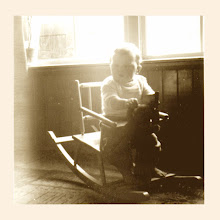
Chécain, July 9, 1991 (photo: A. Siddikh)
And this is where we get to the first of Chécain's compositions on this album. "Lukika", like "Mele", offers another opportunity to enjoy the magical combination of the voices of Sam Mangwana and Chécain, with Chécain following Sam like a shadow. As per usual Chécain is very active as an animateur, in the classic O.K. Jazz style of people like Vicky Longomba before him, i.e. as a kind of commentator in the instrumental bits of the song. Chécain himself has stated that Josky is also singing in this song. If he is, he has managed to stay inaudible; or perhaps he is duplicating the singing of Chécain. The song contains no vocal solo, the duet stays intact until Franco breaks loose after 3'49, with Chécain continuing the animation. Franco's solo, by the way, is a fantastic example of his masterful use of only a very limited amount of chords...

While the songs on the A-side are from 1974, or even earlier, I suspect the B-side was recorded later, and in blatant stereo. The side opens with my favourite from this album: "Toboyana Kaka". The name on the sleeve, "Todutaka Kaka", is clearly an error, perhaps caused by copying part of the following title. Chécain explained the context and the lyrics to Aboubacar Siddikh and me in an interview which took place in the appartment where the T.P. O.K Jazz was staying during their European tour in the summer of 1991. The audio can be found here, and a translation into english here.
Looking back now, nearly twenty years later, I am fascinated by the obvious obsession about the photos, which I have noticed with other Africans too (and also with some Latin-Americans). Especially in the modern age of digital photos any worrying about retrieving photos from someone you once loved seems futile. Perhaps it has to do with the constant threat of witchcraft, which seems especially strong in Congo? Is he afraid that she is going to use the photos to harm him? I wish now I had had the alertness to ask him this....

I think it is safe to assume that the next song, "Bodutaka", was recorded in the same session. The singers are the same, with Sam and Josky backed by Boyibanda and Chécain. Interestingly Franco's guitar is on the left, while the rhythm guitar of Lutumba Simaro is on the right. Especially in the solo from 4'10 on Simaro appears to be trying hard to balance Franco.... Again, Decca is very hyperactive on the bass.

Remarkably Chécain's voice can be best distinguished in Youlou's "Ledi", possibly also recorded in the same session. From 1'40 he can be heard loud and clear on the right, while Youlou, Sam and Josky and again Youlou (and this twice) do their solo bits.

The photo Aboubacar took (on the left) has been hanging on the wall near my computer for some time now. The man with an impressive career from Micran Jazz, via - amongst others - Kongo Jazz, the legendary Rock-a-Mambo and Bokelo's Conga Jazz to the T.P. O.K. Jazz looking up, - with indignation in his expression, but resignation in his composure.
He died too young.

GMFLP 009


* Both parts of "Assitou" have also been released on African 360.053. That album also includes "Zando Ya Tipo-Tipo" and "Lukika".

EDIT December 21, 2010: Aboubacar Siddikh points out that Chécain in fact sings on five of the tracks. He also sings on "Assitou", although this is perhaps not so clear. It can, however, be derived from the fact that he does throw in some 'animation', - and is present on percussion (which may very well be the subject of a future post....).

EDIT January, 9, 2011: After some criticism (unfortunately of the anonymous kind...) I have re-digitised the record and have uploaded this to another server. It can be found through this link.
The A-side sounds slightly better, if you ask me.

June 10, 2010

Cobantou

I hope you don't think I am going to go wild posting all kinds of football (soccer) related or South African music. I may be tempted to dedicate one (1) (or perhaps even two) post to football, and South African music is never off the agenda, but I'm afraid I am not going to let an over-commercialised and hyper-hyped media event dictate my blogging agenda (ahum)....

Instead I would like to dig a bit deeper into Congolese music. And in this post I would like to share three singles by Orchestre Cobantou, the orchestra founded and led by Paul Ebengo, better known as Dewayon.

You may recall that Dewayon played a crucial part at the start of Franco's career. Given this shared past, it is not surprising that when Congolese music started to be divided in two sides (or 'schools', or influences), Dewayon and his orchestra were categorised as belonging to the O.K. Jazz school. Nevertheless Dewayon has always managed to retain an authentic sound, at first - after switching from Loningisa to the new Esengo label in 1957 - with his Conga Jazz, and subsequently with Cobantou.

It is a pity that so little has been documented about the history of this orchestra, which over the years saw a great amount of very talented musicians pass through its ranks. It appears that Dewayon had some difficulty retaining these musicians, because I don't think many stayed for very long. One of these talented musicians was guitarist Raymond Brainck, who I mentioned in these earlier posts.

I am not sure when Brainck ceased to be a member. I known he was with Cobantou in the early days of the Londende label.
It is hard to say if he is playing on Londende Lo 040, the first of these three singles, mainly because it is very hard to distinguish any individual member in these two extremely unusual tracks. This may be due to the collaboration with le Groupe Monguande Folklorique, who appear to be doing their own Monguande (does this refer to the Mongo?) thing, while Cobantou are desperately trying to get their bit in....
It is clear, however, that Mobutu is the subject of both songs.

Londende Lo 040

Equally remarkable, but for very different reasons, is the second single, released as Londende Lo 043. The A-side contains a relatively normal rumba composed by Dewayon. In the song some of the members of the orchestra are named. Raymond Brainck is mentioned immediately after Dewayon (1'55 into the song), and they are followed by singer Flamy (Pierre Kiyika a.k.a. Kiyika Masamba) and Gérard (probably sax player Gérard Kongi, and probably not Gérard Madiata), Francky (the great singer Franc Lassan?? or the sax player who played with Nico?), Chécain or Lola Djangi (who switched to the O.K. Jazz in April 1967), singers Champro (often spelled as "Champrou" or even "Champroux") and Emmano Mbala, rhythm guitarist Jacky Mambau, someone called Tollo (who can he mean??), Jean-Paul (or Champro again?), Modero (more than likely sax player Mekanisi Modero, who later played in Tabu Ley's Afrisa) and André Mazi (drummer). Although this summing up of the names of band members may sound narcissistic to present-day western audiences, it was almost a necessity for a lot of African musicians, not only to receive immaterial credit from audiences in a largely oral culture, but also to avoid being excluded when it came to dividing the revenues.
The B-side of this single is again remarkable. Composed (and sung?) by singer Champro it is a french ballad, sung with a frenchness that would have made even Kabasélé jealous. It's a pity the song only lasts 2'22.....

Londende Lo 043

The third single is from a later date; it was originally released as Londende Lo 148. This suggests, by the way, that Cobantou have recorded and released quite a few singles in a short period. I deduce this from the presence of Chécain (standing fourth from the left and audible in the song on side A, and possibly on side B too). Apparently Raymond Brainck had left the orchestra, because Delafrance (before with Nico's African Fiesta) is named as the lead guitarist. I particularly like the A-side "Molangi Ya Pembe Communiqué".

African 90.404 [Londende Lo 148]

Again I invite you to correct, add, comment etcetera. I am trying to help in reconstructing some of the history of these glorious orchestras.

Edit (June 11, 2010): Here are all three singles in one file.

January 26, 2010

Kongo Georges

Just one EP in this post, I'm afraid. But there are still four songs by Kongo Jazz on this record, and that's two more than on the EP I posted earlier.

Two of these songs were composed by Simaro Lutumba, of O.K. Jazz fame, who in an interview in 1991 (see below) named one of these, "Lisolo Ya Ndako", as a song of which he has fond memories. Unfortunately he did not say why...

On side two there are two songs composed by a certain Bejos, both featuring a harmonica (which may suggest that there is a link between Bejos and the harmonica..). The first of these is an instrumental track.

Although I have no confirmation of this, it appears to me that one of the two singers in these songs is Lola Djangi 'Chécain', who started his musical career in 1957, in a band called Micra Jazz, alongside Simaro and Raymond Brainck while still at school. They went on to form Kongo Jazz (named after Kongo Georges, the owner of the bar where they performed, and where the O.K. Jazz had performed before them) in 1957, and were signed on to the Esengo label in 1960. At the Esengo label he met Nino Malapet and Rock-a-Mambo, and Dewayon and his Conga Jazz, which bands he joined before switching over to the O.K. Jazz in 1967.

Kongo Jazz recorded quite a few tracks at the Esengo label. Chronologically the two Simaro tracks were originally released after the two tracks in my earlier post. Of the two Bejos compositions I have no idea when they were released.

I am digging up material for a post dedicated to the lead singer of the Kongo Jazz, Gérard Madiata, who Simaro described as a great singer who sang in all the languages: flemish, dutch, english...

The interviews with Simaro and Chécain can be found here.

Columbia ESDF 1444 (new link November 2, 2010)

December 30, 2009

Staying O.K.

With the release of yet more compilations of Franco's extensive repertoire it may seem amazing to some that there are still plenty of songs that have not been published in digital form. And I am sure you will be even more amazed when you hear the quality of some of these compositions.

In this post I would like to share three singles with you, all from what many consider to be Franco's heyday. Personally I am more inclined to believe that Franco's whole career existed of one big heyday, or at least an impressive series of peaks. The particular heyday I am referring to started more or less when Sam Mangwana joined the O.K. Jazz. A lot has been written about this move, and I will post Sam's own views about this at a later date.
For now, I would like to stick to the music.

The first of these singles is from 1973. On the A-side is one of the earliest tracks of Mangwana with the O.K. Jazz, "Cedou". Remarkably he is only present as a backing vocalist in this composition by rhythm guitarist Lutumba Simaro (whose compositions* were crucial to the evolution of the O.K. Jazz in this turbulent period). The leading vocals are by Michel Boyibanda and Franco, and Lola Djangi 'Chécain' is present in the background. But Mangwana's contribution is nevertheless impressive, and certainly meant a shift towards a more melodic style for the O.K. Jazz.
Franco's own intentions in this respect are illustrated by the B-side, "B.S.K.". A brilliant bolero sung by Franco himself, accompanied by the full horn section of the Tout Puissant O.K. Jazz. I hope someone can explain to me why this masterpiece has never been digitized.
Note, by the way, that Franco did play this song in a concert in Amsterdam in January 1989.

Fiesta 51.198 B

The second single is from 1974. "Mele", the A-side, was composed by Chécain, who was seen by his colleagues as the main representative of the 'old' style of the O.K. Jazz. In my opinion it was a stroke of pure genius to combine the voices of Mangwana and Chécain, and this is probably one of the best examples of this golden combination. Chécain sings the 'seconde', i.e. the lower of the two vocal parts which adjusts to back the main melody of the song. He has a rather sad, but slightly dry and understated singing style, while Mangwana's voice soars and flows with the melody. To me, Chécain's backing turned Mangwana into an O.K. Jazz style singer.
As Mangwana prepares for the solo, Michel Boyibanda comes in to support Chécain. But some echo is put on to his vocal, adding distance to his singing, while Chécain remains in the foreground. Trumpets come blaring in and Sam launches into his solo. After just over four minutes Franco takes control and leads his orchestra into a full-force climactic finale.
It is not surprising that Chécain had a preference for working with Mangwana in his compositions, e.g. in "Lukika" (which is sometimes incorrectly attributed to Franco) and the 1975 track "Toboyana Kaka".

The B-side, "Mowunbu Ya Makanisi" (titled "Bano Brekete" on the Kenyan release "In Memoriam Vol. 9"), was a song composed by Franco, and is sung by Franco himself and Youlou Mabiala, who had already ventured outside of the O.K. Jazz, but had returned (and would soon leave again). The song starts off in a rather conventional old style O.K. Jazz manner, but after almost two and a half minutes breaks into rather unusual solo by Franco, in which he almost hammers the chords.

Pathe 2 C006 15717


The third record of this post, "Tata Na Bebe 1 & 2", is one I posted earlier, but in a different setting. And, on closer study, I have changed my mind about the dating of this song. The use of four vocalists and the guitar sound are indications it must be from 1974.
The song opens with two rounds of solo vocals by (in this order) Sam Mangwana, Josky Kiambukuta, Michel Boyibanda and Franco, followed by two more rounds in the same order, but with a chorus filling in the gaps. At the end of part one, Franco is about to steer the orchestra into a rousing, nose-down, kamikaze style sebene.

This also means that the first two and a half minutes of part two are a copy of the last two and a half minutes of part one (you can check this if you like...), and the recorded track lasted less than seven and a half minutes (the result of joining the two unique parts can be found here). This is, by the way, not unusual for tracks from this period. My impression is that this was due to the technical limitations I wrote about in an earlier post about Haruna Ishola (who was the co-owner of one of the most advanced recording studios in Africa).

Getting back to the subject of digitizing Franco's oeuvre, only one of the five** tracks in this post has been released on CD. The four other tracks seem essential to the understanding of how the O.K. Jazz became the Tout Puissant O.K. Jazz, - while staying O.K..

Editions Populaires EP 205

* "Ebale Ya Zaire", "Mabele", "Minuit Eleki Lezi" - to name just three.
** counting the two parts of "Tata Na Bebe" as one.

EDIT July 7, 2016: all three singles in one file.