|
| Ballaké at the Harlem Bar, 1994 (photo: Rob Lokin) |
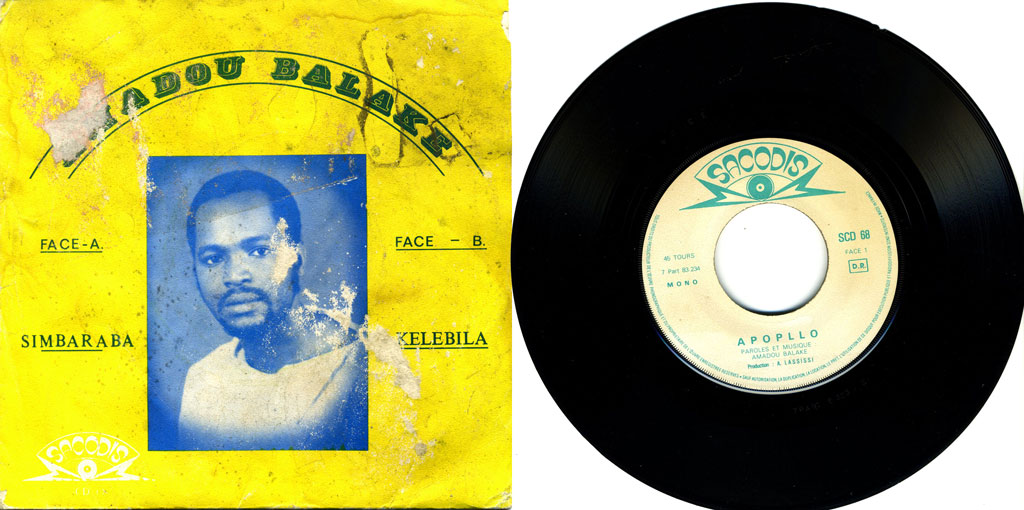
I don't claim to have the final truth when it comes to the biography of Amadou Traoré dit Ballaké, but given the testimony from Guinean artists gathered by Graeme Counsel it seems unlikely that he was a member of the Horoya Band (an orchestra originally from Kankan, Guinea), let alone of the/an orchestra from Ségou, Mali. The confusion may have arisen from the name of the orchestra he did join: the Bafing Jazz from Mamou, Guinea.
More biographic detail in my earlier post here.
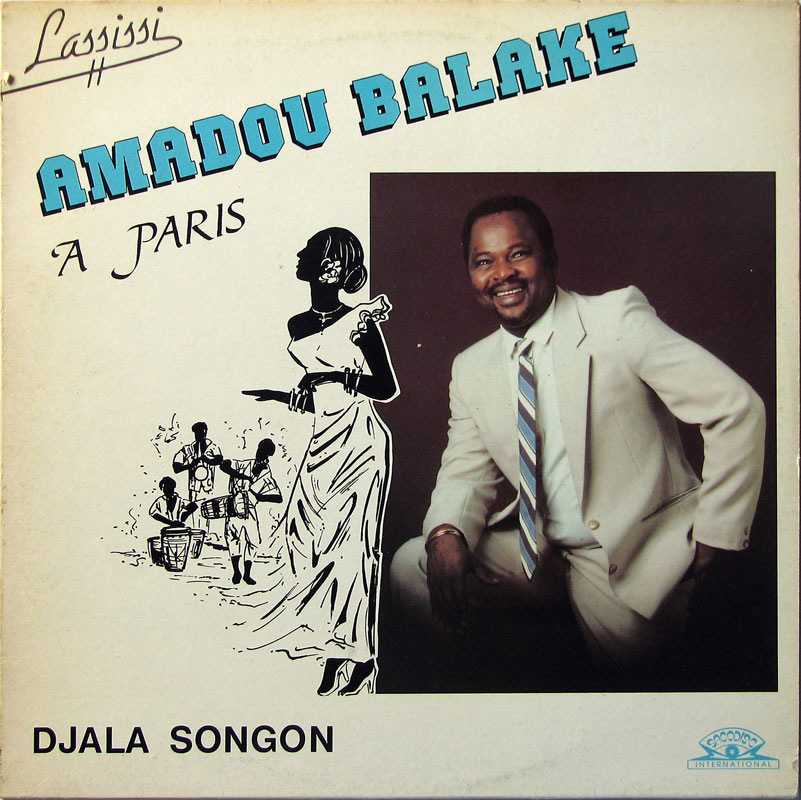
I was reminded recently that this album has so far not been posted on any of the (fortunately numerous) blogs dedicated to African music. I have to admit I am not able to follow all the blogs, so I still may be wrong. But it seems such a great omission that I felt it my duty almost to step in, and share this classic album by one of my musical heroes.
The album is another, and perhaps even the best, example of Ballaké's street credibility. He follows the trend to add elements of funk, James Brown and afrobeat to his music, but still manages to remain authentically Burkinabé. What may appear as pure funk, is in fact based on existing (mainly Mossi) traditional rhythms. As for the lyrics, Ballaké is - as always - inspired by the ordinary man and woman in the street. The "bar konon mousso" (literally "bar bird woman") refers to the women serving in bars. Ballaké sings about the hardships they have to suffer and the 'excursions' they have to make to earn a few extra francs. Going by this article (unfortunately only in french) their situation - over 30 years later - remains unchanged.
I especially like the way in which Ballaké describes his own position in relation to these "birds". The bar kono mousso tells him: "Ballaké leave me alone. You don't have money. Musician, that's nobody*. You're a poor boy."
 I'm sure the other songs on this album have similar - or perhaps even more notable - lyrical highlights.
 Musically this is no less of a treasure trove. It may take a while for the penny to drop with some of these songs, but when it does I am sure the whole album will embed itself in your musical memory forever. The brilliantly manic "Nabacouboury", the head-over-heels "Dounignamou", the almost Guadeloupean "Balake Ya Mariama", they all have one thing in common: the powerful presence of the great Amadou Ballaké.
Sacodis LS 8-78 or here (MF)
Going through my archives, I discovered a copy of an older version of "Bar Konon Mousso". Despite the rather scratchy condition of this single, released on the Club Voltaïque du Disque label, I am inclined to prefer this version to the version on the Sacodis lp. The tempo seems more fitting to the theme of the song, and the ambience is more 'bar-like'. The lyrics appear to be exactly the same as the later version. The condition of the vinyl is more annoying on the A-side "Absetou", especially as this song has some (seemingly?) nice instrumental bits.
Club Voltaïque du Disque CVD 44 or here (MF)
*"c'est pas quelqu'un", where a "quelqu'un" is a 'somebody', and a "grand quelqu'un" is an important person.