December 30, 2011

Update on "Disaster"

John Collins has sent me an update on the situation with his house and archive (see my post of November 20). Unfortunately his mails have been marked as "spam" (probably as a result of the links he included), so I have not spotted these until a few days ago.

He writes:
"As mentioned in my previous email letter - due to a number of factors that include climate change unplanned development and blocking of natural waterways Accra was severely flooded on 26th Oct and my own Bokoor House and the BAPMAF Music archives its hosts were severely affected. After this I spent a frantic months trying to save the damaged materials and at a guess I roughly estimate that about 10% of the BAPMAF archives was destroyed . Please see the following blogspots of the American Public Radio program Afropop for pictures and more details of the disaster - and also the BBC and Batuki Music of Toronto

http://blog.afropop.org/2011/11/flood-disaster-at-john-collins-bokoor.html
www.bbc.co.uk/news/world-africa-15797338
http://www.batukimusic.com/index.php?option=com_content&view=article&id=76&Itemid=118

Also see youtube video clip: http://www.youtube.com/watch?v=hncle453r_0


In my previous email letter I also mentioned some of the things I have to do - which include
· Storing all the BAPMAF archives temporarily upstairs in the BAPMAF Exhibition Room.
· Repairing flood damage and build circa 200 feet of reinforced concrete wall with gravel embankment to immediately protect the Bokoor/BAPMAF property from flooding.
· Replacing thousands of dollars of lost equipment, computers, car, scanners, cameras, record player, stabilizers, 4-track recorder, chargers and 12 volt battery backup system, power point and slide projector etc..
· Finding means and funds to temporarily relocate both my residence and the exhibition section of BAPMAF (either together or separately) elsewhere.
· Salvaging and restoring the BAPMAF holdings and make its exhibition section available again to the public.

In just one month I have already done some of the above. I have saved all the materials that could be saved, dried them and stored them with other BAPMAF materials safely upstairs. I have built about 80 feet of wall and embankment. And right now I am making arrangements with a Ghanaian national cultural institution to loan the exhibition section of BAPMAF and have it relocated at somewhere in Accra (possibly the National Museum) - so that it can remain open to the public whilst I am salvaging, re-organising and re-building the BAPMAF archives.

I will also relocate myself my family and the BAPMAF library, research documents and archival holdings elsewhere for the meantime. During this time I will repair flood damage to my Bokoor property and also convert the upstairs property into an area suitable for both accommodation and BAPMAF activities (other than its public exhibitions facilities). It may also be possible later - if a sensible system of drainage is introduced to the area and people are prevented from blocking the river with sawdust and other materials - for my downstairs property to become the location for the BAPMAF Exhibitions space. However, as mentioned, for the meantime, the BAPMAF exhibitions and photo gallery might be located at a suitable national public space in Accra.

DONATIONS
Those who wish to contribute to getting BAPMAF back on its feet should either send donations (especially larger ones) to my bank account (bank transfer) in the UK (see below) - or to a paypal account that has been set up with the help by American colleagues and well wishers. Anyone who already has a PayPal account can simply make a donation through PayPal to at . People who don't have a PayPal account should click on the donate button (marking these as a "gift") on either of the two following blogspots.
http://bapmaf.blogspot.com/
or http://blog.afropop.org/2011/11/flood-disaster-at-john-collinss-bokoor.html

[BANK DETAILS :NATWEST, Tottenham Court Rd Branch, P.O.BOX 2EA 45 Tottenham Court Rd. London WIT 2EA ,Reward Reserve Account of E .J. Collins, Account number 26592258, Sort Code 56-00-31, Swift code NWBK GB 2L, IBAN number GB16 NWBK 56003126 5922 58]

All the best, John Collins

SOMETHING BRIEF ON BAPMAF
I am a Ghanaian-British national, a musician, musicologist and music lecturer at the University of Ghana - and I have been operating the BAPMAF music archives in Ghana since 1990. BAPMAF (the Bokoor African Popular Music Archives Foundation) is an NGO established in 1990 by myself with the assistance and encouragment of some leading Ghanaian musicians and musicologists (like E.T. Mensah, King Bruce, Kwaa Mensah, Beattie Casely-Hayford, Oscarmore Ofori, Koo Nimo and T.O. Jazz, etc), to preserve, research, promote and disseminate Ghanaian/African performing arts, with the focus on popular performing arts. BAPMAF was first opended to the public in 1996 and then after extensive re-building at Bokoor House BAPMAF was re-opened in 2007 during Ghana‘s 50th anniversary Independence Day celebrations. The BAPMAF and its Highlife-Music Institute exhibited the ‘Golden Years of Highlife Exhibition’ through literally 100’s of photos, diagrams, maps, captions and posters as well a instuments and memoribilia connected with Ghanaian, African and Black Diasporic music. The BAPMAF complex also included of a large seminar/work-shop space, digital documentation room, audio-video laboratory and library. The BAPMAF Highlife Institute archival holdings prior to the October 2011 floods consisted of 1,200 photographs/slides, 700 publications, hundreds of rare and old documents and 1,500 hours of recorded music; including almost a thousand old highlife songs on shellac and vinyl records. It provideds materials for teaching and research purposes and has collaborated over the years with many local and foreign agencies: the Goethe Institute, the University of Ghana, the Alliance Francaise, the Dubois Centre, the Swizz Embassy, The Muscians Union of Ghana (MUSIGA), Ghanaba’s African Heritage Library, the US Embassy Public Affairs Section (Black History Month) and Rocky Dawuni’s Africa Live Project. BAPMAF is also a member of the UNESCO Global Alliance for Cultural Diversity and has provided materials too both local and foreign media agencies: the BBC, Joy FM, Ghana Broadcasting, TV3, Citi FM, ETV, American Public Radio, Radio France International, Mietzer-keiner-filmproduktion, Cinecon Africa, Creative Storm, the Soul to Soul project, Archiafrika, Analysis Lost Productions and Panafricas/Instituto Midia Etnica."

I have little to add, apart from an encouragement to donate generously to this very worthy cause.

November 20, 2011

Disaster

This is not really a post. I am just trying to point any readers who may have missed this to the appeal made on the Afropop and the Osibisaba blog.

I am sure the original poster won't mind me quoting John Collins' appeal for help:
"Dear colleagues, supporters, fans, friends and well wishers,

As you know I have been operating the BAPMAF music archives since 1990 which was partly opened at my Bokoor House to the public in 1996 and more fully in 2007. However, devastation struck in the middle of the night of 26th Oct, 2011 in the form of a flood. This occurred over many parts of Accra due to more and more people building in or blocking water ways - so that rivers could no longer easily run into the sea. In our particular Taifa-Ofankor area this was compounded by the construction of a 3 mile section of the Kumasi highway (from Achimota to Ofankor) without adequate gutters - and also saw-millers who have been dumping sawdust in rivers and wetlands.

We residents have complained to both the Ghana National Highways Authority and the Ga District Assembly (Council) over the years to no avail Indeed the National Highways Authority told us residents that they had to build the road first before constructing the drains and that these 2 projects even fell under 2 different ministries. Furthermore, the saw-millers in the MUUS next to us, who are relative newcomer to the area, did not allow space on their adjacent land to ours for a gutter. In fact, by dumping sawdust on the drainage river (Brenyah River) they re-directed part of this river though my house and garden – which broke my wall – they are even now claiming my garden is their ‘natural’ gutter.

The resulting flooding on the 26 Oct. was unprecedented with almost 6 feet of water entering our land and 5 feet into the downstairs house and premises where some of the BAPMAF archival holdings are kept. I was in Mali at the time at an African popular music conference organized by the French Institute in conjunction with and the Malian Ministry of Culture. On returning to Ghana on the 29th I met my family perched upstairs in the BAPMAF exhibition space. They had escaped drowning by 2 minutes due to a timely call from a neighbor upstream who noticed the water build up and got them to leave the house and flee upstairs.

Some of the losses are as follows:
• Approx 10-20% 0f BAPMAF archival holding lost. Some we are still trying to dry and salvage.
• Loss of all electronic equipment including materials donated a few years ago to the BAPMAF archives by the German Goethe Institute for a digitization project.
• Loss of car, backup generator, various pumps, etc.

The house and area is now too dangerous for human habitation (i.e. residential purposes ). All this due to the short sightedness of the government in not insisting the National Highways Authority build storm gutters alongside the highway they have been constructing for seven years (which incidentally also went under water on the 26th Oct). And also the government’s inability to stop individuals or saw-millers etc from building on or blocking natural water flows.

As this is not likely to be resolved in the near future I have no recourse but to remove myself and my family from the house that myself and my father before me have been living since the 1970’s – and find rented property where we will not be drowned like rats.

So my immediate plans are as follows:
- Find temporary storage space for the BAPMAF archives so that at some point in the future these can become available again to myself and the general public.
- Find temporary accommodation relatively near the university at Legon.
- Build circa 200 feet of reinforced concrete wall with gravel embankment to protect the Bokoor/BAPMAF proper from future flooding – so I and the BAPMAF archives can move back to upstairs properties. This alone will cost around 7000$.
- To replace lost equipment, computers, car, scanners, cameras, digital record player, stabilizers, chargers and 12 volt battery backup system, slide projector, etc.
- At some point I will write to various individuals and organizations that donated general books, videos and DVD’s and music materials to BAPMAF to send me, if possible, copies.
- To replace the broken wall and add an embankment to it - or possibly even build a wall and embankment closer to my house and the BAPMAF premises. Even though I will lose my garden this will keep the building premises intact - so that in the future and the government demolishes obstacles to the water course, stops the saw-miller dumping saw dust in rivers and get the Highways Authority to build a storm drain alongside the Achimota-Ofankor Highway --I could at least use the BAPMAF premises again.

If you have any suggestions as how I could proceed – including any agencies, individuals, organizations who could assist financially or by replacing lost books and music this would be most appreciated. Letters of sympathy would also be most welcome.

Yours sincerely
John Collins (Prof).
POSTAL ADDRESS: P.0 Box LG 385, Legon , Accra, GHANA
EMAIL: newbapmaf@yahoo.com

If money is sent to help rebuild please send it to my UK bank account at follows.

NATWEST, Tottenham Court Rd Branch
P.O.BOX 2EA 45 Tottenham Court Rd. London WIT 2EA
Reward Reserve Account of E .J. Collins
Account number 26592258
Sort Code 56-00-31
Swift code NWBK GB 2L
IBAN number GB16 NWBK 56003126 5922 58
"

November 13, 2011

Mama Sissoko

I would like to start this post with a video of the concert by Orchestre Super Biton. This - in my opinion historic - concert took place at the Institut Français in Bamako on October 24, - i.e. on the evening of the first day of the colloque.

Unaware of any seating arrangments, we (Graeme Counsel, John Collins and me) went and sat down in the middle of the first row. Just before the concert began, the Malian Ministre de la Culture, Hamane Niang, made his entry surrounded by his bodyguards. John, to the right of me, was obviously sitting in the seat that was meant for his excellency. But the minister made no attempt to claim his privilege and sat down next to John, and subsequently proceeded to noticeably (but in a dignified manner) enjoy the concert.

This video was recorded with a smaller camera (hence the movement), with mono audio. I am still trying to correct the slight distortion on the songs I recorded (in stereo) with my other camera. So there is more to come....

The title of this song is "Kara Demba". You may remember my post of the Balandzan lp and Bomama cassette, both of which feature this track. The singers in this video are, from the left, Toussaint Siané, Gaoussou 'Papus' Diarra, Aboubacar 'Cubain' Kissa and - the oldest surviving member of the group - Mamadou 'Coulou' Coulibaly. Left of Toussaint is Mama Sissoko, the lead guitarist and chef d'orchestre.


I hadn't seen Mama Sissoko perform as a member of Biton since 1988, and I have to admit I wasn't very enthousiastic about his solo projects. During the tour of 1986, which brought the orchestra to Holland, his fellow musicians complained about his tendency to prolong the guitar solos. The annoyance was one of the factors which led to chef d'orchestre Amadou 'Armstrong' Bah retiring from the orchestra, which in turn contributed to the decline of the orchestra after 1988. So it is ironical that one of the persons who was in a way co-instrumental to the disappearance of this great orchestra is now playing such a major role in its revival.
And not only through his position as chef d'orchestra.

I was particularly impressed by his very controlled and well-dosed guitar playing. I think that most of the participants of the colloque agreed that his well-tempered* guitar managed to compensate to some extent for the absence of a horn section. Or perhaps I should write: the horn section. And, please, don't get me wrong: I still hope Biton finds some good horn players to fill in the gap left by the demise of the great Amadou Bah and Mamadou 'Blick' Diarra.

I hope I can correct the distortion on the other videos so I can share some more examples of the brilliance of this great Malian orchestra.

In the meantime I would like to share with you two examples of Mama Sissoko's guitar playing from the 1980's.
The first was recorded in Amsterdam on October 2, 1986 by Dave van Dijk for VPRO radio. Super Biton did three concerts in the Netherlands, in Amsterdam, Rotterdam and Utrecht. Especially during the concert in Rotterdam Mama was virtually instoppable, also as a result of the audience reaction.

Tere (Super Biton, Melkweg Amsterdam, October 2, 1986) [FLAC]

The second was recorded by myself two years later in Segou, during a concert for president Moussa Traoré, which was recorded by Malian television. This song was actually a 'prelude' to the concert, - which incidentally was attended by no more than 30 persons, including the technicians of the ORTM. The singer of this version of a Malinke classic is Papa Gaoussou Diarra.

Moriba Kaba (Super Biton, Segou November 19, 1988) [FLAC]

I intend to post the complete recordings of the Segou concert in a future post.


* I used this analogy intentionally, as Mama is trying to play in two tonal scales: the heptatonic of the traditional Malinké music and the 'classic' Malinké guitar and the pentatonic of (amongst others) the traditional Bambara music and the classic Bambara ngoni.

November 07, 2011

Colloque

I returned from the symposium - or 'colloque' - in Bamako last weekend, but still haven't been able to digest all the impressions and information from this highly compressed (only one week) but absolutely fascinating meeting. The highlights of this inspiring gathering were too many to deal with in one post, so I intend to dedicate several posts to these.

I am planning to post images of a brilliant concert by the legendary orchestra Super Biton, led by Mama Sissoko, who demonstrated he must be counted as one of the most outstanding guitarists in West-African music.

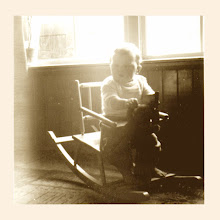
Then there will be a post dedicated to the fantastic research done by Vincent Kenis (who unfortunately was unable to attend the colloque), Césarine Sinatu Bolya and a young Congolese whose name I forgot to write down. They interviewed 'survivors' (musicians and mélomanes) from the golden era of Congolese music, i.e. the 1950s and early 1960s. This includes Paul Mwanga (photo right), who, contrary to what I wrote in my post about the song "Mokolo Nakokufa", is clearly not dead, - or at least was still very much alive at the time of the interview some five years ago.
More mysteries were resolved (and others added...). I was able to retrieve the titles of some unreleased Super Biton tracks, which I also hope to share with you in the near future. I found out more about the Malian lamellophone about which I reported a short while ago.

Other highlights of the colloque included a performance in the restaurant of the Institut Français by a group of azmaris from Ethiopia, which led to a remarkable encouter between a masengo and a sokou (photo right)... I intend to post a few videos of this encounter.

Then there were two very short but delightful performances by John Collins, the eminent expert on highlife music in general (and Ghanian music in particular). Unfortunately on Thursday John received news that his house in Accra had been hit by the floods which destroyed parts of the city. It seems likely (but I have had no confirmation of this) that his music archive has been damaged.... I will keep you informed.
We had some interesting discussions about the influence of the Kru sailors on the musics of west and central africa. No doubt this will lead to another post...

The presentations during the colloque gave plenty of food for thought. I was particularly interested in Lucy Duran's presentation about the phenomenon of the "sumu" (soirée), and the domination of female singers in the Malian music scene (in Mali, that is...). I will certainly come back to this, - and probably soon.
Others. like Ariel de Bigault and Uchenna Ikonne (of the Comb and Razor blog), surprised me with presentations packed with information on subjects about which I know little or nothing.

I could go on about the meeting with experts like Francis Falceto (of the brilliant Ethiopiques series), Wolfgang Bender (the author of - amongst others - the classic "Sweet Mother, Modern African Music", who in his presentation spoke about a subject which is very close to my heart: the archiving and preservation of African musics) and Gérald Arnaud (a francophone expert on yoruba music). I am sure I will dedicate posts to subjects about which they talked.

As I wrote, the programme was very compact. I would have loved to have talked more with South African lawyer, radio presenter and researcher Richard Haslop, who in his excellent presentation on South African music not only came up with some intriguing musical examples, but also appeared to have a fine nose (or ear) for good music in general.
The same goes for prolific writer (he will be finishing books about Malian and Burkinabe music very shortly, and has just published "Afro Pop, L'Âge D'Or Des Grands Orchestres Africains") and almost manic record (vinyl) collector Florent Mazzoleni, who I assume was mainly responsible, or at least instrumental, for my invitation to the colloque, and whom I certainly expect to meet more often (assuming he will be in Europe long enough).

And, of course, it was a great pleasure to meet 'my brother from the other end of the world': Graeme Counsel. We were fortunate enough to - again (after our visit to the first new-style Semaine Nationale in 2001) - share some memorable experiences in Bamako, one of which was the 'excursion' to a performance by one of the new style Apollo groups, Les Frères Dembélé, fronted by a very convincing female singer with a voice somewhere between Tata Bambo and Coumba Sidibé (photo left). This excursion too will be the subject of a post.

I am sure you have understood by now that it was a great meeting. I met many others, who I will mention in future posts. But special thanks must go to Lucien Roux (photo right), the 'directeur adjoint' of the Institut Français, who together with his very friendly staff not only organised the meeting but also proved to be a very pleasant and warm host.

More soon......


I had planned to post this video before leaving for Bamako, but just didn't have the time. It seemed a suitable way to get into the mood for a trip to Bamako. The video is by that almost archetypal Malian musician, 'Tasidoni' Karamoko Keita. This video from 1986 is not of the same exceptional image quality as the one I posted earlier, but is in my opinion musically more exiting. The title, "Randevou Ma Gne", seems to be a misspelling of "Rendezvous magnin" (magnin = bad).

October 05, 2011

Why worry?

I know I shouldn't, but I can get very worked up about stupid adverts. Unfortunately for me, there is an ever expanding range of those, and the level of stupidity has gone down to way below what until not very long ago was considered absolute zero. When it comes to that paradigms shift faster than the speed of light......

One advert that has completely put me off buying anything from that particular brand is by a manufacturer of cameras. In this advert a lady announces that she is a type of camera. Who are you kidding, woman? Are you receiving treatment for this psychopathic delusion?!

And this brings me seamlessly (!) to the subject of this post. For there are very few musical groups that have a name that is more inviting, more curiosity provoking than the group of the late Suberu Oni. Indeed: Why Worry?

I have attempted to dig up some background to this musical master from Nigeria, but have found it a challenge. Suberu Oni appears have been one of the pioneering highlife artists rising to fame in the 1950s and 1960s. A contemporary of Ayinde Bakare and Theophilus Iwalokun, he was a native of Ondo (and assume they mean the city in the state of the same name) and sang in a local Ondo dialect with a distinct, deep guttural voice.

The name of his record label suggests Suberu Oni was proud of his origins. The name Ekimogun is probably related to the name of an annual event. "On Ekimogun Day all sons and daughters of Ondo Kingdom at home and in the Diaspora come together to showcase their culture and raise funds for the development of their community.
In the past 23 years that the Ekiomogun Day has taken place, hundreds of indigenes have benefited from scholarship awards and trainings, through the funds generated by the organisers of the event, the Ondo Development Committee.
"
I think it would be too much of a coincidence to assume that Oni´s label led to the naming of this event. It seems more likely that both refer to another element of Ondo tradition and/or culture.

As to this lp, I am totally in the dark when it comes to titles and other useful info. Perhaps someone can help us out. If not, we still have the solid, old style music and those remarkable voices. And that in itself is good enough, if you ask me.
So why worry?

Ekimogun EKLP 096 (alternative link)

October 02, 2011

Twin

For those in Bamako, Mali, from October 24 to 29 there is a chance to meet some of the experts on African music during a symposium organised by the Centre Culturel Français in Bamako. And I will be there too, not so much an expert as an experienced amateur (and/or 'dabbler').

For me it will be a chance to meet some people again. Graeme Counsel and I only meet in Bamako, and it will be just over ten years since we last met on the occasion of the first Semaine Nationale des Arts et de la Culture, which took place from September 11 to 21, 2001. But some sadness will also be inevitable, as many of my musical friends will be missing, - and missed. Daouda 'Flani' Sangaré, Zani Diabaté, Ali 'Farka' Touré: they have all passed away.

For those who are unable to attend, I will attempt to report on the event when I get back.


All this has little or nothing to do with the cassette I would like to share with you in this post. This cassette has presented a mystery to me since I got it in the early 1990s. I have no idea what ensemble, troupe or group is playing, and I can only guess what the titles are. The sleeve carries no information apart from the title "Gao Thonville". And I am pretty sure that by the last name they actually mean "Thionville", a town in the north-east of France near the German border.

Apparently Thionville is twinned with Gao. This 'jumelage' was started in 1986, was suspended in 1992 (as a result of the Tuareg rebellion) and resumed in 1999.

My guess is that this cassette is a result of the enthusiasm of the initial twinning. This enthusiasm is reflected in the musical content. Or perhaps "love" is a better word to describe the general feeling (sorry) of the music.

The songs appear to be entirely in the Sonrai (or Songhai or Songhoi) tradition, which is no wonder given the history of Gao as the capital of the Sonrai empire. Perhaps you even recognise track B3 as a version of "Tamala (Maïga)", the first song of the Songhai lp in the "Premiere Anthologie de la Musique Malienne" on Bärenreiter-Musicaphon. Compared to this, the version on this cassette is much smoother, less earthy, and this is largely a result of the strange instrument which plays a leading role on this cassette. You may be tempted at first to think it is a kind of balafon. A smaller type perhaps. But listening to the first notes on side B it becomes clear that it must be a kind of lamellophone or thumb piano. This instrument, plus the njarka (fiddle), and the proud singing of the girls' chorus make this cassette one that could claim a permanent place in your musical memory, - as it has done with me....

Gao Thonville (cassette)

September 26, 2011

EverGreenSound

In this post I would like to share with you a rather obscure lp, produced in Nigeria but containing music from Congo. The obscurity is limited to the production. The artists, although not credited on the sleeve nor on the label (for copyright reasons?), are of the well-known variety. Of the ten tracks on this compilation four are by the O.K. Jazz, two by the Negro Band, two by Rock-a-Mambo and two by the the - perhaps less known - Dynamic Jazz.

Although I am not sure about the Dynamic Jazz songs, I estimate all the tracks to be from the late 1950s. The songs performed by the O.K. Jazz were composed by that great guitarist Antoine Armando, better known as Brazzos, and were originally released as Loningisa 189 (in 1957) and 211 (in 1958). The songs by both the Negro Band and Rock-a-Mambo* were originally released on the Esengo label as Esengo 192 ("Kumaye"), 194 ("Senhorita"), 119 ("Brigitte") and 71 ("Bakoule Bidama"). And Dynamic Jazz made records (and quite a few) for the Ngoma label. Both "Rumbita Dynamic Jazz" and "A mi amor bonita" were at one point released on the Super 45 (EP) 1005.

As a compilation this record deserves excellent marks. It features some of the Greats of the époque d'or of Congolese music. "Bakoule Bidama", for example, not only stars singer Rossignol, but also Kabasele himself, as backing vocalist (and a brilliant one, if you ask me!), plus Essous and Nino Malapet. Franco and Vicky Longomba both are prominent in the O.K. Jazz songs. But that is only to be expected.

Needless to say that my favourites are the tracks by Brazzos. I am still trying to figure out what latin original 'inspired' "Cuidado Conamallo" (which I suspect should be "cuidado con la mano"). I am inclined to believe that the O.K. Jazz copied the song (or perhaps just the name of the song) from other Congolese orchestras. I recall having heard a version by either Rock-a-Mambo or African Jazz (if I bump into it I´ll post it).

Lyric-wise there is a lot to be enjoyed, especially in that same song. With Vicky in fluent jibberish-spanish: "Venga, chiquita! Baila! Awela-wela" (or "abuela, abuela"?) ", si yo me muero muero muero de todo mi amor".
Who invented these lyrics?

ISP 101

* Actually "Brigitte" is credited in the Esengo catalogue to Lucie Yenga et l'African Rock.

September 18, 2011

"San" but really Nioro

In this post I would like to share two wonderful videos from Mali. Both are by a 'troupe' from San, a town (or village?) in the Ségou region.

Ségou may be known as the historic heart of the Bambara empire, it is also a region with a large cultural variety and diversity. A diversity that has been eminently exploited by great stars like Hawa Dramé and Safoura Denou & Seny Sangaré.

In this case I have been told that the songs are both Sarakolé traditionals. The first song, "Danama", has also been interpreted by another Malian diva, the great Mah Damba, on her very first cassette. And I am sure I have heard the second song performed by another singer, somewhere, sometime (please help me out here...).

I love the almost informal 'ambience' and the sheer fun of these two songs, and more particularly the dancing. The men take turns in showing of their skills, almost in a peacock manner. And the women in turn react (when they feel like it) by joining them. And the dance itself has absolutely nothing to do with the over the top dancing that is sometimes presented as "the" African dancing.


Although I have had this video for over twenty years I keep discovering new details. I refer to the reactions by the participants of the troupe, and not to the curtain, - which has of course seen some great acts over the years (you may remember this video, and I´m sure you´ll find more examples on Ngoni´s great Youtube channel).

The second song starts of in a much slower tempo, which reminds me of Hawa Dramé. But then it gradually gathers speed until, after 4'20, it switches into another rhythm, and a more peacocky dancing ensues. What a delight!


EDIT/CORRECTION: January 15, 2012: A comment on YouTube, plus the find of a video by "Les artistes de San" have urged me to investigate the origin of the groupe in these two videos.
This research has led to the correction posted here.

The videos in this post are in fact from a groupe from Nioro, in the Kayes region and near the Mauretanian border. As to the cultural origins of the music it seems likely the comment on YouTube may be right that group is Bella (i.e. maure).

September 08, 2011

Mbaraka on TV

I have to confess it is at times hard to keep up with all the comments that are sent to me both on posts on this weblog and on videos uploaded to Youtube. Although I don't always have the time to react to all of these I can assure you I do read them and do appreciate all the comments* you send in.

The other day a comment was sent to me by a Mr. Msomali, who is - I deduce from his writings - a Tanzanian living in the UK. He wrote about a subject which is also very close to my heart and very high on my (unfortunately extensive) wishlist:
"I want to start the discussion of where the videos of Mbaraka Mwinshehe can be found. I am sure it is in Kenya and Japan.

I will explain why.
Mbaraka took his Morogoro Jazz Band as part of a large group of cultural ensembles/artists representing Tanzania in the EXPO 70 exhibition that took place in Japan in 1970. Being good in technology as they are, I am certain the Japanese recorded every event that went on in each pavilion.

As to Kenya: a lady asks her husband to take her to a Super Volcano show (when the Band was visiting the couple's town) as she says she listens to their songs almost every single day on the Radio, and she also watches them often on the Television. All this is in Mbaraka's song called 'Nipeleke Nikashudie' (which roughly translate as "Take me, so that I can see them perfom live"). By TV here she means VOK Tv (Voice of Kenya Tv).

I believe both VOK (now called KBC Tv) and NHK Tv (Japan's National Tv) have Mbaraka's videos in their archives.

I also believe that both these institutions have a public duty to release these videos of one of the truly gifted musicians to come out of East Africa.
His country was/still is too poor to have have had Television in his lifetime, but he served Kenyans and entertained them in equal measure, and has everyone listened to his song EXPO 70, celebrating his participation there?
Mbaraka belonged to all of us, so the least these two institutions can do to world music heritage is to release his videos into the public domain.

Any ideas on how we can go about asking them to do this service to world music, anyone?

Regards
Mr. Msomali
"

What can I say? I support this appeal wholeheartedly. I can't wait to see a video of this giant of Tanzanian music.

If there is anyone out there who has links with either Kenyan or Japanese television, please help us out!

And should you need any encouragement I advise you to listen to this brilliant sample of the great man's repertoire, which as it happens contains both the song "Nipeleke Nikashudie" and two songs dedicated to the EXPO in Japan (including that killer "Expo No.2"!!!!). And the five other songs are all equally disarming in their unpretentious and truely authentic brilliance.

POLP 566 (or POLP 566) (December 21, 2016: update the first link to 320 kbps)

* I would like to make an exception to those sad idiots (and I am holding back here...) who try and slip a commercial link into their so-called comments.

September 01, 2011

Crossover

Over the years I have come to acquire a distinct aversion against the term "crossover". It must have started in the eighties with (the highly respected and very likeable) journalist Stan Rijven, who was always on the lookout for the connection, the 'cross-fertilisation' (yuk) and the 'sameness of the other'. At the back of this inclination I couldn't help but suspect a lack of confidence in the appeal of African music.
My personal preference lay and lies in finding the 'otherness in the other', in the authenticity of the (so far) unknown. If I had wanted more of the same I wouldn't have ventured out into the realm of African music. How can I appreciate a crossover if I have no idea of the individual elements involved in the crossing?

Rochereau (r) with a very young Daouda Sangaré
Twenty-five years later my aversion is still present. Experience has shown that musicians claiming that their music is a 'crossover' between styles usually produce a watered-down blend of predominantly western music.

This doesn't mean, however, that all 'interaction' between different musical styles is uninteresting. But the real enjoyment of this can only start with the understanding and acknowledgement of the styles involved.

And that brings me to the subject of this post.

For how can anyone really enjoy Rochereau's version of "Seyni Kay Fonema" without knowing Laba Sosseh's original (here and here), and without having some knowledge of Rochereau and his background and of the music of African Fiesta (in this case National) and African Jazz?
Rochereau's version was recorded in the late 1960s and is not only interesting because it is a cover of a Senegalese song. That in itself is if not unique, at least very special. I suspect that Laba Sosseh singing a Congolese tune (Orch. Bella Bella's "Sola") is not half as special.
It is unclear why "Izeidi" is included in the title, unless Roger Izeidi is playing the (prominent) maracas in the song or is responsible for the rather abundant orchestral arrangment, as he was in the Surboum days with African Jazz. Both are possible.

The end result is very enjoyable. I doubt very much though if this song can or should be called a crossover. Not only is there no crossing going on (it's just a slightly different version of the original), but also it is not really very far from African Fiesta's style. As Franco put it in 1987, the main source of inspiration of the African Jazz school of Congolese music lies in Latin-American music. So a Latin-tinged song like "Izeidi Seyni Kai Fonema" is normal for one of the main representatives of the school.

The B-side of the single (Ngoma J 5153), "Los Probas", seems to confirm this. I haven't been able to trace the - no doubt latin - original of this song (maybe this has another title?), but it is still very much in the African Fiesta style of borrowed melodies like "Africa(n Jazz) Mokili Mobimba" and "Kayi Kayi".

The second single (Ngoma J 5156) has more of the same: an instrumental, "Négra Sanda", which could be (and I'm not saying it is) a version of "La Negra Sanda", a song composed by a certain Francia, and made famous in the early sixties by Pete Terrace (I hadn't heard of him either..) and - perhaps even earlier - by Fajardo y sus Estrellas.
The B-side, "Munequita" (and that's what he sings), certainly is not the "Muñequita" of Sonora Matancera or of Orquesta Aragón, nor Aragón's "Bella Muñequita", - but I'll be damned if the original is not Cuban.

Luckily I have traced the source of "Trembla Tiera" (Flash FL 39, the B-side of Sam Mangwana's wonderful "Bina Ringa", which has appeared on several lp's and cd's). The song was composed by a certain G. Ruiz Perez and recorded as "Tiembla Tierra" by the (still) great Orquesta Aragón.

With all these tracks I love the way in which Rochereau is trying to cover up that he has no idea what he is singing. In "Izeidi Seyni Kay Fonema" this results in a kind of melodic mumbling with a few recognisable words thrown in. In the spanish songs he is slightly more confident, but still has a tendency to drift off into gibberish.
I love it!

More Rochereau to follow soon.

Ngoma J 5153
Ngoma J 5156
Flash FL 39

or as one file.

PS± Covers of the Ngoma´s are very welcome...